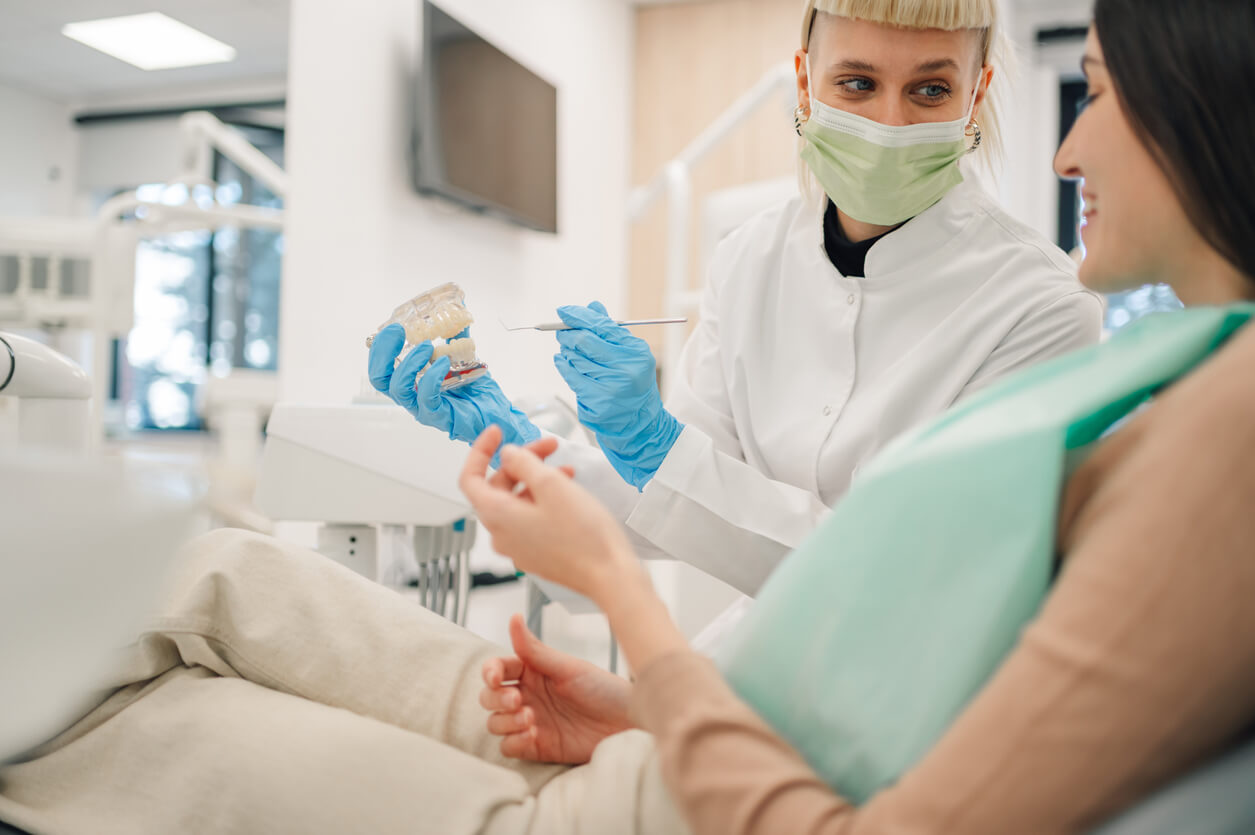
According to statistics, there’s a growing demand for dental solutions like dental bridges. As people age, losing teeth becomes more common, leading many to seek ways to fill those gaps and improve their smiles.
Dental bridges provide an easy and effective way to address this issue. In this article, we’ll answer your questions about dental bridges: What types are available? What materials are used? What is a dental bridge made of? We’ll explore why they might be the right choice for you.
What Are Dental Bridges and Teeth Bridges?
Dental bridges, also known as tooth bridges, are fixed devices used to replace missing teeth. They attach to nearby natural teeth or dental implants to fill in gaps.
This process involves creating a custom-fitted bridge that resembles the shape and color of your natural teeth, making sure it blends seamlessly. It provides a practical solution for tooth loss by creating a stable and comfortable replacement.
Benefits of Dental Bridges
Dental bridges offer numerous benefits, addressing various dental needs and situations:
- Improved Chewing: Missing teeth can complicate eating. Bridges close those gaps, making it easier for you to enjoy your favorite foods comfortably once more.
- Enhanced Appearance: Gaps from missing teeth can affect your smile. Bridges restore your smile by replacing those missing teeth, giving you a more complete look.
- Prevent Shifting: When you lose a tooth, nearby teeth might shift into the empty space. Bridges hold your remaining teeth in place, maintaining proper alignment.
- Support Facial Structure: Your teeth help maintain the shape of your face. Bridges fill spaces and prevent the sunken appearance that can occur with missing teeth.
- Restore Speaking Ability: Teeth are important for clear speech. Replacing missing teeth with bridges can help you speak more clearly and confidently.
Types of Dental Bridges
Dental bridges come in various types, each tailored to meet specific needs:
- Traditional Bridges: This common type uses crowns on natural teeth on either side of the gap to secure the bridge.
- Cantilever Bridge: Used when there’s only one tooth next to the gap. It’s anchored with a crown on just one side, making it useful when support from two teeth isn’t possible.
- Maryland Bridge: This option utilizes a metal or porcelain framework attached to the backs of nearby teeth. It’s less invasive because it doesn’t need crowns for support.
- Implant-Supported Bridge: This bridge option relies on dental implants for support instead of natural teeth. It’s particularly strong and well-suited for larger gaps.
What Are Dental Bridges Made Of?
When asking, “What are dental bridges made out of?” it’s important to know how different materials can influence their appearance, strength, and price. Here’s a closer look at the common materials used in dental bridges, each offering unique benefits and considerations:
| Material | Description | Pros | Cons |
| Porcelain Fused to Metal | Combining porcelain for appearance with metal for strength | Natural look, strong support | Metal can sometimes show near the gums |
| Ceramic | Made entirely of ceramic, no metal | Highly aesthetic, blends well with natural teeth | Can be more brittle than metal |
| Zirconia | A type of ceramic, extremely strong and durable | Very strong, highly aesthetic | Can be more expensive |
| Resin (Temporary) | Used for short-term solutions | Inexpensive, easy to work with | Not as strong, can wear down quickly |
| Gold Alloy | Made from gold mixed with other metals | Very strong, does not wear down easily | Less natural-looking, more costly |
| Metal Alloys | Often used for strength, covered with other materials | Strong, supports large bridges | It can affect appearance if it is visible |
| Lithium Disilicate | A glass-ceramic with excellent translucency | Highly aesthetic, good strength | Can be expensive |
The Dental Bridge Procedure
Getting fixed dental bridges involves a series of well-coordinated steps, typically spread over a few dental visits. Here’s a detailed breakdown of the process:
Step 1: Consultation
During this visit, the dental professional evaluates your oral health and discusses whether a dental bridge suits your needs. They’ll explain the types of bridges available and help you choose the best option. You can also ask questions, such as “What are tooth bridges made of?” to gain a better understanding of the materials and how they might work for you.
Step 2: Preparation
The following step involves preparing the abutment teeth. These teeth are precisely reshaped to accommodate crowns that will support the bridge. This process requires removing some tooth enamel to ensure the crowns fit securely.
Step 3: Impressions
Once the teeth are prepared, the dentist creates a detailed mold of your teeth. This impression is essential for crafting a bridge that fits perfectly. Skilled technicians at a dental lab then use this mold to build your custom bridge.
Step 4: Temporary Bridge
While your fixed bridge is being made, you might receive a temporary bridge. This serves to protect the prepared abutment teeth and gums from injury or sensitivity, allowing you to continue with daily activities comfortably. You can also inquire about “What are temporary dental bridges made of?” to understand the materials used for short-term solutions.
Step 5: Fitting Appointment
Upon your return, the fixed bridge is ready for fitting. The dentist places it carefully, checking the fit and making precise adjustments so it integrates smoothly with your bite and looks natural alongside your other teeth.
Step 6: Final Placement
Once the fit is perfect, the dentist permanently cements the bridge onto the abutment teeth. They may use special bonding agents to secure the bridge, filling the gap effectively and restoring your smile’s appearance and function.
Step 7: Follow-Up Care
After placement, follow-up appointments may be scheduled to check on the bridge’s performance and address any concerns you might have. Regular visits help your bridge continue to fit well and serve its purpose.
Choosing a reputable dental office is essential for a successful dental bridge. With expert guidance, like that offered at Dunedin Family Dentistry in Palm Harbor, you can ensure a seamless process and lasting results.
Caring for Your Dental Bridge
Caring for your dental bridge is important for both its longevity and your oral health. Here’s how to keep it in good shape:
- Brush Regularly: Clean your teeth and bridge with a soft toothbrush twice daily to remove plaque and food particles.
- Floss Daily: Make sure to floss around your bridge. Consider using a floss threader or specialized interdental brushes to clean under the bridge.
- Use Antibacterial Mouthwash: Using mouthwash can lower plaque levels and promote healthy gums.
- Eat a Balanced Diet: Steer clear of hard or sticky foods that might harm the bridge. Instead, choose a diet filled with fruits, vegetables, and lean proteins.
- Regular Dental Visits: Schedule regular check-ups to keep an eye on your bridge’s condition and clean any hard-to-reach areas.
- Monitor Surrounding Teeth: Pay attention to the health of the teeth supporting your bridge. Keep them strong and healthy to ensure the bridge stays stable.
- Check for Issues: If you notice any discomfort or movement in the bridge, contact your dentist promptly for an evaluation.
Dental Bridges vs. Other Tooth Replacement Options
When deciding how to replace missing teeth, comparing dental bridges to other options like implants and dentures can be useful. Here’s a straightforward overview to help guide your choice:
| Option | Description | Pros | Cons |
| Dental Bridges | Fixed devices anchored to adjacent teeth or implants | Quick placement, stable fit, non-removable | Relies on nearby teeth for support |
| Dental Implants | Metal posts implanted in the jawbone, topped with crowns | Highly durable, no impact on nearby teeth | Surgical procedure, a longer process |
| Partial Dentures | Removable appliances with artificial teeth that attach to the gums | Easy to adjust, less costly initially | Less stable, may require adhesives |
| Removable Bridges | Similar to partial dentures, can be taken out as needed | Removable for cleaning | Less secure, frequent need for adjustment |
Understanding the benefits and mechanics of each dental option empowers you to make informed decisions. Discuss your choices with your dentist to identify the best solution for your needs. For personalized guidance, consider reaching out to a reliable dental office like Dunedin Family Dentistry, where experts are ready to help you achieve the smile you desire with tailored care and expertise.
Frequently Asked Questions About Dental Bridges
When considering dental bridges, you might have several questions. Here’s a detailed list of common inquiries to help guide you:
What Is the Lifespan of a Dental Bridge?
Studies report that after about 3-5 years, 89–94% of dental bridges are still in place. However, after 10 years, survival rates decrease to around 79–82%. This emphasizes the need for regular care and maintenance to extend the life of your bridge.
How Much Do Dental Bridges Cost?
Costs change based on the procedure’s complexity, bridge type, and materials used. To receive an accurate estimate and explore financing options, it’s wise to discuss your specific situation with your dentist.
Do Dental Bridges Affect Nearby Teeth?
Traditional type of dental bridges rely on natural teeth for support, which might involve reshaping them to fit crowns. Your dentist will assess the health of adjacent teeth to determine the best approach.
Find Your Ideal Smile Solution at Dunedin Family Dentistry: Call Us Today!
At Dunedin Family Dentistry, we offer dental bridges, among other comprehensive services, to meet your needs. From routine cleanings and Invisalign to dental implants and cosmetic makeovers, our expert team is ready to help you achieve a beautiful and functional smile.
Book a consultation with us to explore your options and learn how our personalized care can truly impact your life. Reach out to Dunedin Family Dentistry in Palm Harbor, FL, today, and together we’ll find the way to a healthier, brighter smile.