According to statistics, clear aligners have helped 17 million people straighten their teeth by 2023, including 4.5 million teens. They are 80% to 90% effective for mild to moderate corrections. After treatment, it’s recommended to wear a retainer, similar to traditional braces.
Invisalign retainers are essential for maintaining your new smile after using Invisalign clear aligners. But do you know the best way to keep them clean? This guide will walk you through simple steps and tools to keep your smile bright and your retainers clear.
What Are Invisalign Retainers?
Invisalign retainers are devices used after the completion of your Invisalign clear aligner treatment to help maintain your teeth’s new position. Unlike Invisalign clear aligners, which gradually shift your teeth into place, retainers are worn to keep your teeth in their new, correct position.
Made by Align Technology, these clear retainers are custom-fitted to your mouth. Their removable nature makes eating and cleaning easy, providing both comfort and functionality. By wearing your retainers consistently, you’ll protect your new smile and keep it looking great for years to come.
Why Cleaning Your Invisalign Retainers Is Important
Keeping your Invisalign retainers in top condition is essential for many reasons.
Prevents Bacteria Buildup
By cleaning daily, you stop harmful bacteria and plaque from building up, which can result in gum or periodontal disease and tooth decay. Neglecting this allows germs to thrive, negatively impacting your oral health.
Eliminates Bad Breath
Fresh retainers equal fresh breath. Regularly cleaning them helps remove odor-causing bacteria, keeping your mouth feeling fresh and confident throughout the day.
Maintains Clarity and Appearance
Proper cleaning makes sure your retainers remain clear and free from unsightly stains. This transparency not only preserves their discreet nature but also boosts your confidence in social situations.
Prolongs Retainer Life
A consistent cleaning regimen extends the life of your retainers. This means fewer replacements over time, saving you money and maintaining the effectiveness of your treatment.
Supports Overall Oral Health
Clean retainers contribute positively to your overall dental health, helping to prevent complications like cavities and infections. A healthy mouth supports your general well-being.
Keeps Your Treatment on Track
Consistent care of your retainers makes sure that your teeth remain in their new, corrected position, maximizing the benefits of your Invisalign treatment. It secures all the hard work you’ve put into achieving your new smile.
How to Clean Clear Retainers
Keeping your Invisalign retainers clean is essential for preserving your new smile and maintaining oral hygiene.
Dos
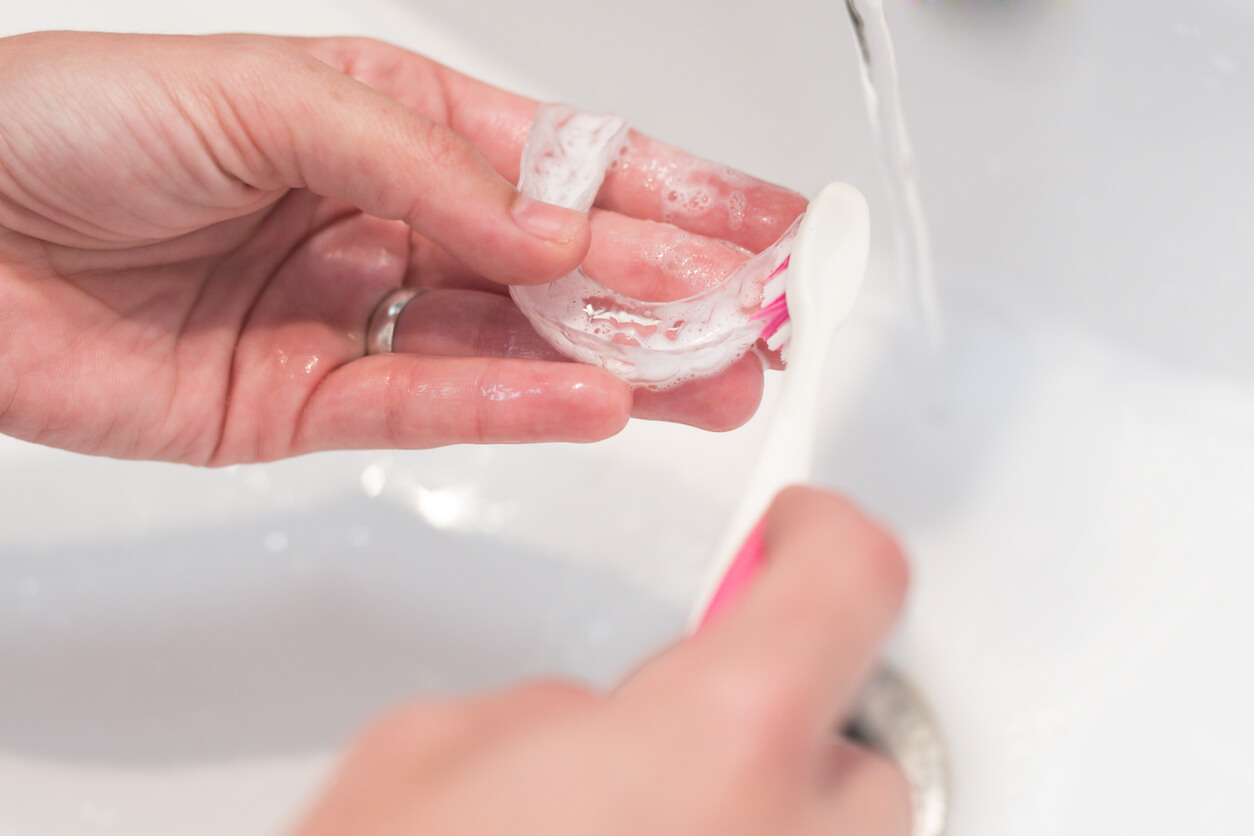
- Gentle Brushing: Gently clean your retainers using a soft brush. Opt for mild, unscented soap to avoid leaving any residue that could alter the taste or comfort. This method effectively removes surface debris and bacteria while preserving the retainer’s material, ensuring it stays in optimal condition.
- Frequent Rinsing: Rinsing your retainers in lukewarm water several times a day is a simple yet effective step. It’s especially important to rinse them after removing them for meals. This practice helps eliminate saliva, which can harbor bacteria and debris, keeping your retainers fresh and reducing odor.
- Regular Soaking: Schedule regular soaking sessions using a cleaning tub with Invisalign cleaning crystals or a non-abrasive denture cleaner. Soaking is essential for thoroughly eliminating bacterial buildup and maintaining the retainers’ transparency and aesthetic appeal. Aim to soak them at least once a week or more frequently if instructed by your dentist.
- Natural Cleaning Solutions: If you prefer natural methods, a mixture of white vinegar and warm water offers a safe and effective deep clean. Sodium carbonate can be used occasionally to boost cleaning power. These solutions naturally break down build-up without harsh chemicals, keeping your retainers hygienic.
- Proper Storage: When not in use, always store your retainers in a clean, protective case. This prevents accidental damage and protects against contamination from environmental bacteria, dust, and other particles. A robust case will also safeguard against loss, making sure your retainers are always ready for use.
- Thorough Inspections: Regularly inspect your retainers for signs of wear or damage. Look for cracks, warping, or changes in fit. Early detection allows your dentist to intervene in a timely manner, making sure your retainers continue to function effectively and comfortably.
Don’ts
- Exposure to Hot Water: Never expose your retainers to hot water, as high temperatures can warp and distort their shape. This can negatively affect their fit and effectiveness. Always use cool water or lukewarm water for rinsing and cleaning to maintain their integrity.
- Use Toothpaste: Toothpaste often contains abrasive ingredients like sodium lauryl sulfate. These can scratch and dull the surface of your retainers, making them more visible and less effective. Opt for mild soap or specialized cleaning solutions designed for retainers to keep them both clean and undamaged.
- Utilize Scented Products: Avoid scented soaps and mouthwashes as they can leave unwanted residue on your retainers. This can alter both the taste and feel, making them uncomfortable to wear. Stick to unscented cleaning products to ensure a neutral, fresh experience every time.
- Eating With Retainers: Always remove your retainers before snacks or meals to prevent food particles from being trapped. Eating with retainers in place can lead to bacterial buildup and unpleasant odors, compromising your oral hygiene and the freshness of your retainers.
- Long Exposure: Don’t leave retainers exposed to open air for extended periods when not in use. This increases the risk of contamination and potential damage. Always store them in their protective case to keep them safe and clean.
- Skip Daily Cleaning: Make daily cleaning a non-negotiable part of your routine. Skipping this can lead to a buildup of plaque and bacteria, which might result in oral health issues over time. Regular care will keep your retainers hygienic and effective.
How Often to Clean Invisalign Retainers
Keeping your Invisalign retainers clean is essential for maintaining oral hygiene and prolonging their lifespan.
| Frequency | Description |
| Daily Cleaning | Remove plaque and bacteria with daily care. |
| Weekly Deep Cleaning | Conduct a thorough clean for stubborn residue. |
| Immediate Rinsing After Removal | Rinse retainers right after taking them out, especially post-meals. |
| Monthly Inspections | Check for wear and damage to maintain effectiveness. |
How to Keep Invisalign Retainers Clean
Maintaining the cleanliness of your Invisalign retainers involves more than just brushing. Here are additional strategies to ensure they remain fresh and hygienic:
Allow to Dry Fully
After rinsing your retainers, let them air dry completely before placing them in the storage case. This prevents moisture buildup, which can create an environment conducive to bacteria and mold. Place them on a clean paper towel or cloth in a well-ventilated area to help them dry.
Avoid Chemical Exposure
Keep your retainers away from harsh chemicals or cleaning agents not specifically designed for them. These substances can degrade the material, introduce harmful toxins, and even alter the retainers’ taste. Stick to the recommended cleaning solutions to maintain their integrity.
Regular Check-Ups
Schedule routine visits to your dentist to make sure your retainers remain in good condition. Dentists can offer professional cleanings, provide advice on care techniques, and recognize any issues early on, preventing potential discomfort or misalignment.
Separate Storage for Aligners and Retainers
If you’re transitioning from aligners to retainers, store them separately. Mixing them can lead to potential damage and confusion. Clearly label the cases to avoid mix-ups.
Limit Exposure to Extreme Temperatures
Avoid leaving your retainers in places with high temperatures, like inside a hot car or near a stove. Extreme heat can warp and damage them, altering their fit and effectiveness. Consistently storing them in a cool, dry place will protect their shape and function.
When to Call or Visit Your Dentist
It’s important to stay vigilant about the condition of your Invisalign retainers. Here are instances when you should reach out to your dentist:
- Visible Damage: If you notice cracks, chips, or any visible damage on your retainers, contact your dentist immediately. Damaged retainers can compromise their effectiveness in maintaining your teeth’s position.
- Improper Fit: Should your retainers feel loose or uncomfortable, it may indicate warping or wear. An improper fit can lead to shifting teeth, undermining your treatment progress.
- Persistent Bad Breath: If bad breath lingers despite regular cleaning, it could signal bacterial buildup or hidden debris. Your dentist can provide a thorough dental cleaning and check for underlying issues.
- Discoloration: Noticeable discoloration that doesn’t improve with cleaning might signify material breakdown or excessive plaque. Your dentist can evaluate the retainers and suggest solutions.
- Allergic Reactions: If you experience irritation, redness, or allergic reactions in your mouth, discontinue use and consult your dentist. They can check the problem and recommend appropriate alternatives.
Frequently Asked Questions
Caring for your Invisalign retainers is essential for maintaining your oral health and making sure they last. Here are answers to some frequently asked questions:
Can I Use Baking Soda for Cleaning?
Yes, you can utilize baking soda in your cleaning routine. Mix it with lukewarm water to create a gentle cleaning solution. This mixture helps remove stains and bacteria without being too harsh on the retainers’ material.
How Long Should Retainers Soak in Cleaning Solutions?
For a thorough clean, it’s usually recommended to soak retainers for 15–30 minutes. Whether you’re using a specialized cleaning solution, Invisalign cleaning crystals, or a natural mix like vinegar and water, this soaking time will help break down residue and freshen your retainers effectively.
Can I Clean Retainers With Vinegar?
Absolutely, white vinegar mixed with warm water is a safe and gentle cleaning option. This natural solution helps to remove odors and eliminate buildup while being kind to the retainer material. It’s an excellent alternative if you prefer to avoid chemical cleaners.
Maintain That Winning Smile: Schedule a Consultation Today!
Taking care of your Invisalign retainers is key to keeping your smile bright. At Dunedin Family Dentistry, we’re here to help you with all your dental needs, including expert advice on cleaning and maintaining your Invisalign retainers and aligners.
If you’re ready to boost your oral care routine or have any questions about keeping your retainers in top shape, why wait? Book a consultation with us today. Our team is eager to guide you toward a healthy, confident smile.